Emergency Communication Guide
During an emergency, information saves lives. Knowing what is happening, when services will be restored, whether to evacuate or shelter in place — this is just as critical as having water or food. During Storm Eowyn (January 2025), thousands of mobile masts across Scotland and Northern Ireland lost backup power after 24 to 72 hours off-grid, yet Met Office red warnings and the national UK Emergency Alerts cell broadcast still reached people on their phones. The problem is that emergencies typically knock out the very communication systems we rely on: mobile networks collapse from overload, mast backup batteries fail, and your home Wi-Fi router goes down.
Storm Arwen (November 2021) cut power to around one million homes, some for over a week across the North East and Scottish Borders, taking mobile coverage down with it. Even in less severe events, UK mobile networks routinely overload within the first hour of a major incident. Building a backup communication plan is not optional if you want to be genuinely prepared.
The emergency radio: your most reliable lifeline
A radio with AM/FM (and ideally DAB+ and shortwave) is the most resilient communication tool you can own. The BBC is the UK's designated emergency broadcaster: BBC Local Radio carries regional warnings, and Radio 4 long wave on 198 kHz is the historic national emergency frequency. The Met Office issues yellow, amber and red weather warnings that stations relay, and radio transmitters run on backup power when the grid and the mobile network are down.
What to look for in an emergency radio
- Multiple power sources: batteries, solar, and a hand crank. Models with all three guarantee you can always power it on.
- AM, FM, and ideally DAB+/shortwave: FM and DAB+ carry BBC Local Radio and Met Office warnings; shortwave picks up the BBC World Service when local transmitters are down.
- USB output: many emergency radios double as a power bank to top up a phone. A slow charge, but in a crisis it can be the difference.
- Built-in torch: a genuinely useful extra that saves space in your kit.
- SOS alarm: some models include a siren and strobe to signal for help.
Keep batteries fitted and spares to hand. Do not bury the radio in a box at the back of a cupboard. In an emergency every minute counts, and you do not want to be hunting for batteries in the dark.
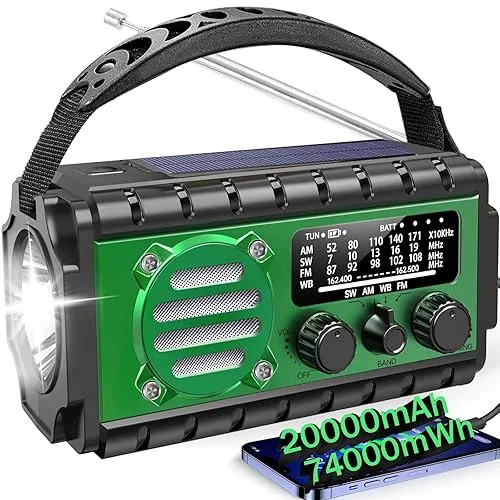
Solar Hand-Crank Radio (AM/FM/SW) with 20,000 mAh Power Bank
AM/FM and shortwave for BBC World Service, solar, hand crank and a 20,000 mAh bank to charge your phone
Walkie-talkies: short-range family comms
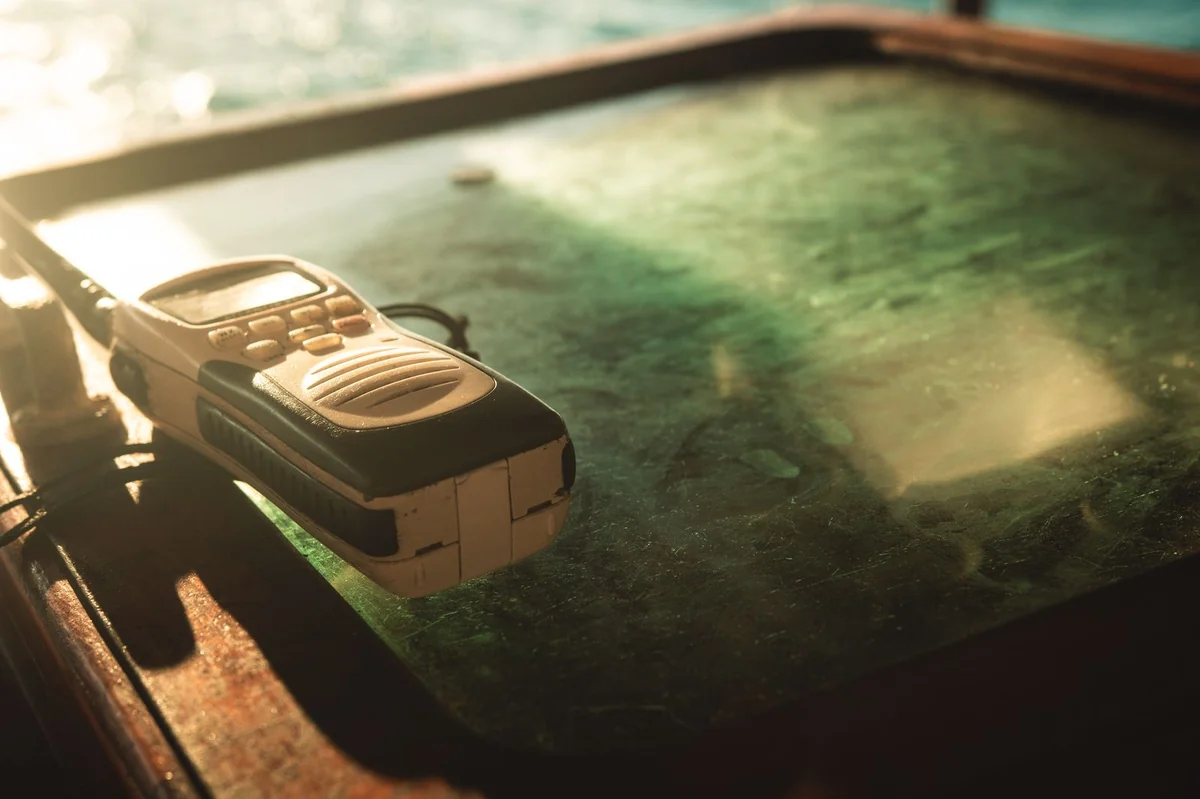
PMR446 walkie-talkies are licence-free in the UK under Ofcom rules (16 channels, 0.5 W) — no licence, no fees, no registration. Real-world range is about 1 to 3 km in towns, far less than the "10-mile" figures on the box, but more than enough to coordinate a household. Unlike the US, the UK does not use FRS or GMRS, so look specifically for PMR446 sets that are legal to use here.
- Main use: coordinating family members in different places — one at home, one collecting the children, one fetching supplies.
- Advantages: they depend on no infrastructure, run on AA or rechargeable batteries, and are simple to use.
- Limitations: limited range, especially in cities with tall buildings. Not for long-distance contact.
- Tip: agree on a channel and a simple code with your family before an emergency, so you are not scanning 16 channels looking for each other. See our recommended PMR446 sets →
Family communication plan
Beyond the devices, you need a family communication plan. It defines how you will reach each other and where you will meet if an emergency hits while you are apart. The government's gov.uk/prepare campaign and the British Red Cross both recommend writing one down and practising it at least once a year.
Elements of the plan
- Primary meeting point: a spot near home to regroup if you have to leave (a neighbour's, the end of the road, a local landmark).
- Secondary meeting point: a backup location in another part of town in case your area is affected.
- Out-of-area contact: pick a relative or friend in another part of the country as the family "switchboard." Everyone calls or texts that person to check in — long-distance lines often work when local ones are jammed.
- Emergency numbers: carry a printed card. Your phone can die.
UK emergency numbers
- 999 (or 112): all emergencies — fire, police, ambulance, coastguard. Works from any phone, even with no credit or SIM.
- 101: non-emergency police.
- 111: NHS non-emergency medical advice (England, Scotland and Wales).
- 105: the free national power-cut line — connects you to your local network operator and reports outages.
- 0800 111 999: the National Gas Emergency line if you smell gas.
- What3Words: not a number but install the app — UK 999 call handlers use it to pinpoint your exact location.
Print these and put them on the fridge, in your grab bag, and in your wallet. When your phone is at 3% is not the time to be searching the internet for a number.

Acme Tornado 2000 Emergency Whistle
Pealess and extremely loud, works when wet. Made in Birmingham — the simplest, most reliable way to signal for help
Your smartphone in an emergency
Your smartphone is powerful but fragile: it depends on its battery, on coverage, and on network infrastructure. To get the most out of it during an emergency:
- Switch to flight mode or Low Power Mode when you are not actively using the phone. Drop the brightness, close background apps, and turn off Wi-Fi and Bluetooth.
- Text instead of calling. SMS uses far less power and gets through more reliably on overloaded networks than a voice call.
- Leave UK Emergency Alerts switched on (they are on by default on 4G/5G phones), and register for the emergencySMS service so you can text 999 if you cannot speak or have no voice signal.
- Keep a charged power bank. See our energy guide to pick the right one.
- Download offline maps (Google Maps or OS Maps) and install What3Words. If you have to move without mobile data, offline maps are essential.
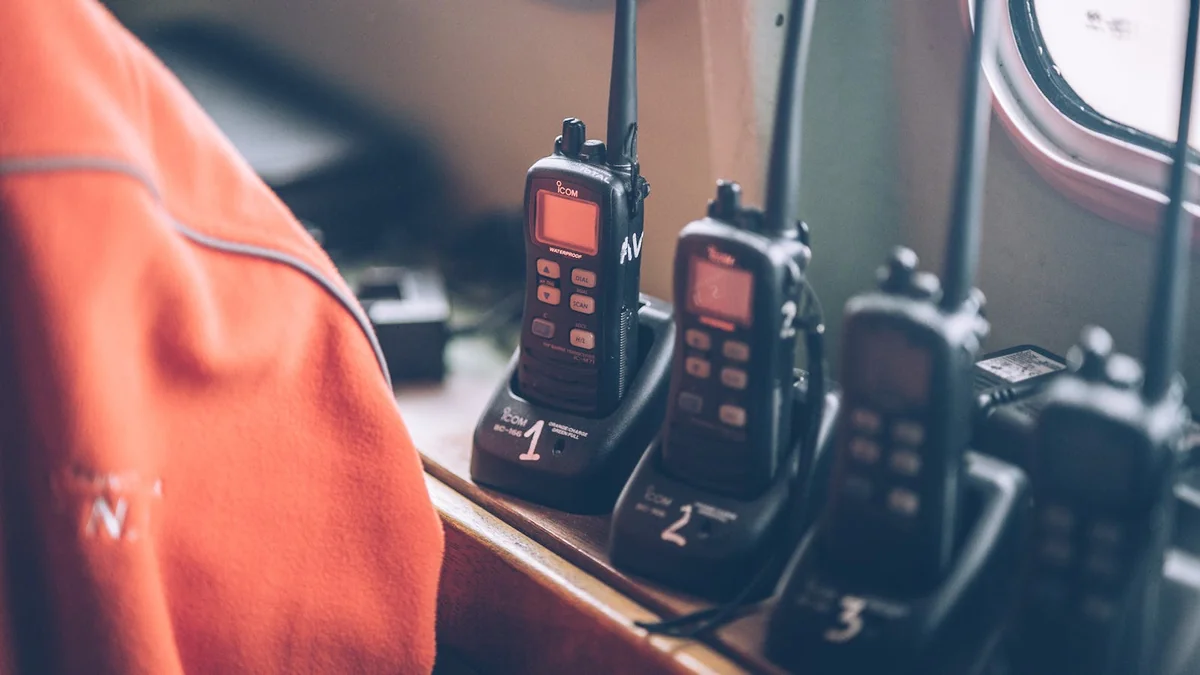
Quick checklist: your communication kit
- 1 AM/FM/DAB+ radio with battery, solar, and hand-crank power
- Spare batteries for the radio
- A pair of licence-free PMR446 walkie-talkies with batteries
- Printed card with UK emergency numbers (999/101/111/105) and your family contact plan
- A charged power bank for your phone
- Offline maps downloaded and the What3Words app installed
- A loud emergency whistle
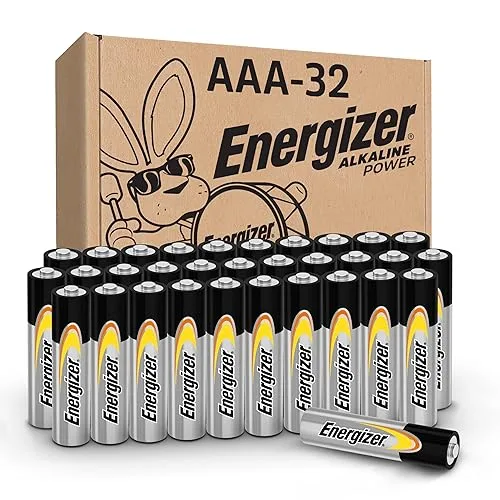
Alkaline AAA Batteries, 32-Pack
The checklist says "spare batteries for the radio". This is the boring purchase that makes the radio above actually switch on
Communications are the category most families forget when they build an emergency plan. Yet knowing your children are safe, receiving Met Office and UK Emergency Alert instructions, or being able to call for help can be the single most important thing in the first hours of a crisis. The emergency planner includes communication gear tailored to the scenario you set up.
Sources: Met Office, gov.uk/prepare, British Red Cross, Ofcom (PMR446), Energy Networks Association (105).
Frequently asked questions
What is the UK Emergency Alerts system and how does it work?
The UK Emergency Alerts service is a national mobile cell-broadcast system, run by the Cabinet Office Resilience Directorate and launched in April 2023. It sends a loud 10-second alarm with vibration and a screen message to every 4G and 5G handset within a defined geographic area, even if your phone is on silent or in Do Not Disturb. It was used live during Storm Eowyn in January 2025 across Northern Ireland and parts of Scotland, and again for severe flooding warnings in late 2024. You do not need to sign up — every UK mobile receives them automatically. Alerts come from gov.uk, the Met Office or local Category 1 responders (police, fire, ambulance, councils) and are reserved for risk-to-life events. To prepare: keep your phone updated to the latest iOS or Android version, make sure Emergency Alerts are on in Settings (they are by default), and discuss with elderly relatives what the alarm means so they do not panic.
Recommended products
Compare prices and availability on Amazon.co.uk
What's the difference between PMR446 and FRS walkie-talkies?
PMR446 (Private Mobile Radio 446 MHz) is the UK and European licence-free walkie-talkie standard, regulated by Ofcom. It uses 8 main channels in the 446 MHz UHF band at 0.5 W maximum power, giving roughly 1 to 3 km range in town and 5 to 8 km in line-of-sight conditions like across a valley. FRS (Family Radio Service) is the US equivalent — different frequencies (462/467 MHz) and up to 2 W output. FRS radios are illegal to use in the UK without an Ofcom licence because they operate on frequencies allocated to other UK services and use higher power than PMR446. eBay-imported FRS radios are a common mistake. Stick to PMR446 from Motorola, Cobra, Midland, Binatone or Retevis — they are widely sold at Argos, Currys, Halfords and Amazon UK from £30 a pair. Make sure the box specifies "PMR446 — licence-free in EU/UK" before buying.
Recommended products
Compare prices and availability on Amazon.co.uk
Does my landline work during a power cut in 2026?
Probably not for much longer. The traditional copper PSTN landline, which carried its own line power and worked during blackouts via an old corded phone, is being switched off by Openreach. BT Digital Voice (also branded EE Home Phone, Sky Talk and similar at other providers) is the replacement, and most UK households will have migrated to it by the 2027 PSTN switch-off. Digital Voice runs over your fibre or copper broadband — which means when the power goes out, your landline goes out too. If you have a personal alarm pendant, a Telecare device, a stairlift phone or a vulnerable relative, you need to plan ahead: 1) Request a free battery backup unit from your provider (BT, Sky, Virgin all offer one for vulnerable customers — gives 1 to 4 hours of standby). 2) Keep a charged mobile and a power bank as primary backup. 3) Register on your provider's Priority Services Register. 4) For Telecare, ask your council's adult social care team about 4G-enabled alarms.
Recommended products
Compare prices and availability on Amazon.co.uk
How do I report my location with What3Words to UK 999?
What3Words (W3W) divides the world into 3 m x 3 m squares, each with a unique three-word address like "filled.count.soap". All UK 999 emergency services accept W3W since 2020, and Mountain Rescue, RNLI, the Coastguard and many police forces actively prefer it for remote locations where postcodes are useless. How to use it in an emergency: 1) Download the free What3Words app before you need it (iOS, Android). 2) Open the app — it works fully offline once installed because the squares are calculated locally. 3) Tap the GPS button to centre on your location and read out the three words. 4) Call 999, ask for the relevant service (police, ambulance, fire, coastguard, mountain rescue) and say "I have a What3Words location — it is ///filled.count.soap". 5) Spell it out if the operator asks; double check homophones. The Cairngorms, Snowdonia and Lake District have seen huge uptake; British Red Cross trains volunteers on W3W.
Recommended products
Compare prices and availability on Amazon.co.uk
How do I send a text via satellite on iPhone in the UK?
Apple Emergency SOS via Satellite has been live in the UK since November 2022 and is free for at least two years after activating an iPhone 14 or later (Apple has so far extended the free period for existing users). When you have no mobile signal and no Wi-Fi, the iPhone shows a "No Service" indicator and offers to connect via satellite. To use it: 1) Hold the phone out under open sky — trees, valleys and tall buildings block the signal. 2) Tap Emergency SOS, then "Emergency Text via Satellite". 3) The phone runs a short triage (nature of emergency, casualty count, location) and bundles it into a compressed message. 4) Follow the on-screen arrow to keep the phone aimed at the satellite — a single message can take 15 seconds in clear sky, several minutes in trees. 5) UK 999 control rooms receive the text and relay to local services. For walking, climbing or sea kayaking in the Highlands or Snowdonia where there is often no mobile coverage, also consider a Garmin inReach Mini 2 or ZOLEO as a dedicated satellite messenger.
Recommended products
Compare prices and availability on Amazon.co.uk
Verified Communication Products
Browse our curated catalogue of emergency radios, PMR446 walkie-talkies, and communication gear on Amazon.
View communication products →Our recommendation
If you do only one thing, get a DAB+ emergency radio with battery or hand-crank power. When the grid is down and mobile networks are overloaded, BBC Sounds, the Met Office and local DAB+ stations are still one of the most reliable ways to know what is happening. The EmergencyKitLab UK planner includes communications gear in its recommendations and adapts it to your scenario.
Calculate exactly what you need
Our planner adjusts quantities to your family and situation.
Build your personalised plan